


Block Therapy
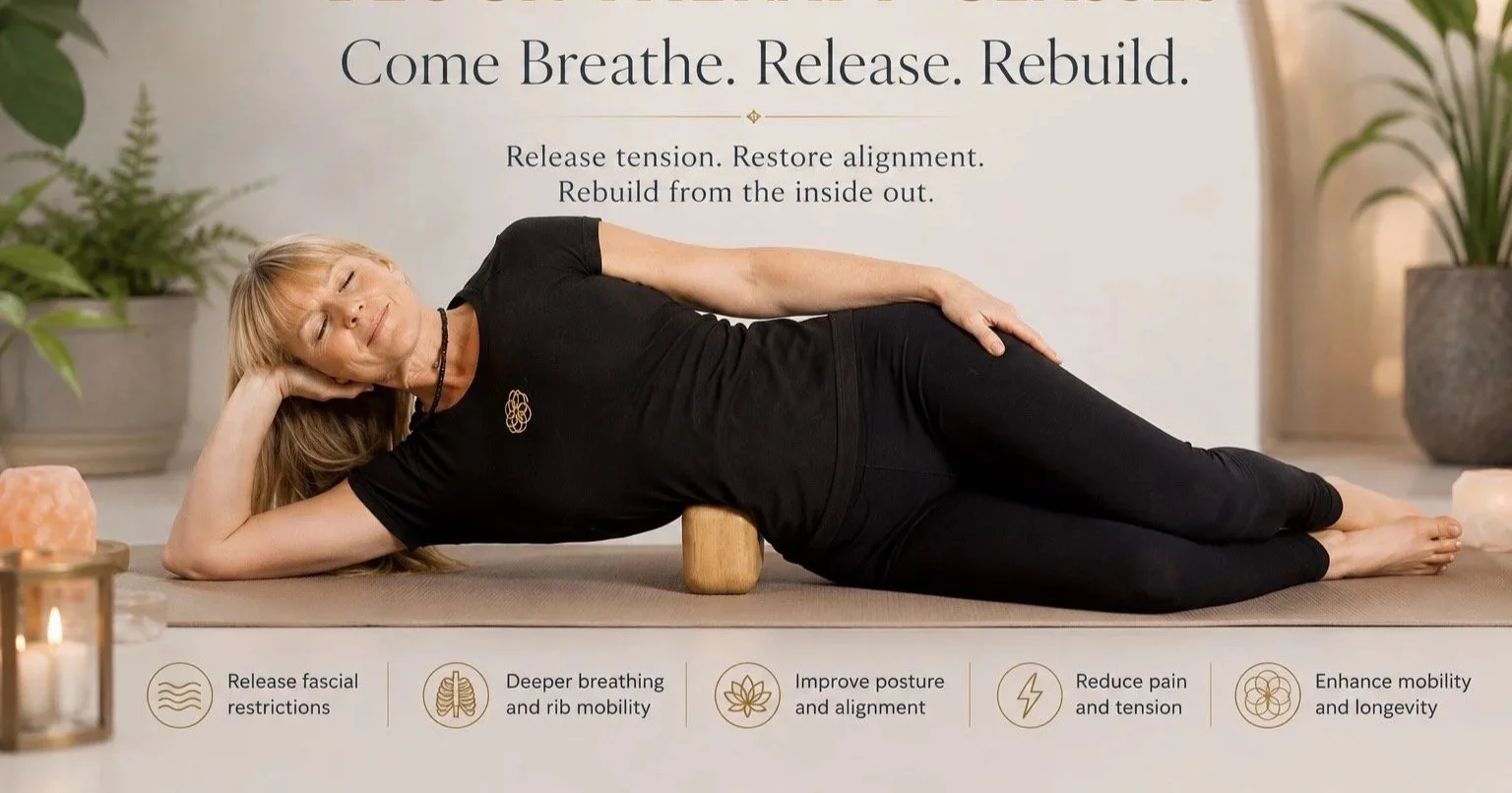
Block Therapy® Classes
Rebuild Your Body From the Root
Your body wasn't designed to live in a constant state of tension.
Hours at a desk. Old injuries. Emotional stress. Repetitive movement. Even shallow breathing can slowly compress the body over time, creating restrictions that affect how you move, breathe, recover, and feel.
Block Therapy® offers a simple yet profound way to reverse that process.
Through intentional breathwork and therapeutic fascial decompression, you'll learn how to restore space within the body, improve circulation, and awaken tissues that have been held in protective patterns for years.
This is more than stretching.
This is rebuilding your body from the inside out.
Why Fascia Matters
Fascia is the living connective tissue that surrounds every muscle, organ, nerve, blood vessel, and bone in your body. When healthy, fascia is hydrated, elastic, and allows everything to glide effortlessly.
Over time, however, physical stress, injury, inflammation, surgery, poor posture, and emotional stress can cause this tissue to become dense, dehydrated, and restrictive.
The result?
You may notice:
Persistent neck and shoulder tension
Tight hips and low back pain
Reduced mobility
Poor posture
Shallow breathing
Chronic stiffness
Slower recovery
Reduced energy
A body that simply doesn't feel like it used to
Block Therapy helps restore movement where your body has become stuck.
A Longevity Practice for Every Body
At Aquarian Uprising, we believe longevity isn't just about living longer.
It's about moving well.
Breathing fully.
Recovering efficiently.
Maintaining strength, resilience, and vitality for decades to come.
Block Therapy is one of the most effective self-care practices I've found for helping the body age with greater ease.
Each class helps improve the quality of your connective tissue while supporting healthy circulation, lymphatic flow, posture, mobility, and nervous system regulation.
Small changes practiced consistently create extraordinary results over time.
What Happens During Class?
Every class is guided and intentionally paced.
We'll focus on different regions of the body each week—including the feet, calves, hips, pelvis, abdomen, ribs, shoulders, neck, jaw, and spine.
Using your Block Therapy block and guided breathing techniques, you'll learn how to release fascial restrictions safely while allowing your body to naturally reorganize into better alignment.
Many participants notice:
Deeper, fuller breathing
Increased flexibility without stretching
Less pain and stiffness
Better posture
Improved balance
Greater body awareness
A profound sense of relaxation
Each class builds upon the last, making this an ideal weekly practice for long-term health.
Why Practice Weekly?
Your body adapts to whatever you do most.
One class feels amazing.
Consistent practice creates lasting change.
By attending regularly, you'll gradually unwind years of accumulated tension while learning practical tools you can use at home to support your health between treatments.
Think of it as preventative care for your fascia, your nervous system, and your future self.
Perfect For
Block Therapy is beneficial for almost everyone, especially if you experience:
Neck or shoulder tension
Low back discomfort
Hip tightness
Athletic recovery needs
Poor posture
Stress and nervous system overload
Limited mobility
Chronic tension patterns
A desire to age with greater strength and freedom
No experience is necessary.
What to Bring
Comfortable clothing
Water
Your Block Therapy block (blocks will also be available for purchase), we have a few student blocks available
A willingness to slow down, breathe deeply, and reconnect with your body
Come Breathe. Release. Rebuild.
Healing doesn't always require doing more.
Sometimes it begins by creating space.
Space to breathe.
Space to move.
Space for your body to remember how it was designed to function.
Join us each week at Aquarian Uprising and discover how Block Therapy can help you release years of tension, improve the way you move, and build a healthier foundation for lifelong vitality.
One breath.
One block.
One layer at a time…

Block Therapy FAQ:
What is Block Therapy?
Block Therapy is a self-care body work practice that uses specialized wooden tools and
diaphragmatic breathing to release deep restrictions in the body's fascia, aiming to
enhance mobility, improve posture, support circulation, improve discomfort, and encourage
relaxation.
How does Block Therapy work?
Using Block Therapy’s wooden tools (Block Buddy, Block Baby or Block Paddle), a person
lies over the tool in various positions throughout the body for a minimum of 3 minutes.
With gravity and body weight, the wooden tool is able to sink deeply into the tissue. The
pressure brings increased blood and oxygen into the area, warming the connective tissue
and releasing the powerful seal between the layers of unhealthy restrictions. The person is
taught to use diaphragmatic breathing, rather than breathing with the muscles of the
upper chest.The combination of diaphragmatic breathing, freeing of restrictions, postural
awareness and body alignment form the basis of the Block Therapy practice.
What benefits does Block Therapy offer?
Individuals who practice Block Therapy have reported experiencing relief from muscle and
joint discomfort, as well as improvements in flexibility, mobility, posture, digestion, and
overall well-being. These are personal experiences and may not reflect the results others
will achieve. Outcomes can vary from person to person. The results people have shared with
us are not intended to guarantee or suggest any specific outcome or experience.
Block Therapy Content Guide for Teacher Use with Clients | Page 1/4
Who is Block Therapy for?
Block Therapy is for those who want to take their health into their own hands and who
understand this is a journey backward through time in your tissue. This practice may bring
up moments of discomfort and negative emotion. The benefits far outweigh the challenges
as you progress, but similar to exercise, yoga or Pilates, you will be disrupting the current
pattern your cells are in to establish a healthier you. If you choose to do it, you will be in the
company of an incredibly supportive community, who already know the life changing
benefits of this practice.
Are there contraindications with Block Therapy?
Block Therapy is generally a safe body work practice that anyone at any age can do. Please
see below regarding pregnancy, implants and serious medical conditions.
● Pregnancy: For someone who is pregnant, direct contact with the belly and
surrounding area would generally be avoided. The other areas of the body are safe to
practice, ie., legs, face, neck.
● Implants: It is safe to do Block Therapy with implants; however, it is recommended
that you do not block directly on the implant, but rather around the area of the
implants.
● Serious Medical Conditions: For anyone with serious health concerns it is always
important to seek professional medical advice before starting any practice.
Is Block Therapy like yoga?
Yoga helps you move and maintain the mobility you already have by keeping your tissues
open and flexible. Block Therapy goes a step further. It works to release fascia that has
become stuck or adhered to the bone - something that can limit movement and create
restriction in the body. Fascia can bind to bony surfaces with a tremendous force, and
releasing it requires both pressure and oxygenation. Yoga alone does not get deep enough
through the layers of fascia to provide this release. This is where Block Therapy is
different.Using tools made of wood, similar in density to bone, allows you to reach deeper
layers of fascia that are not easily accessed through movement alone. Once this deeper
tissue is released, you have more mobility available, which can then be supported and
maintained through practices like yoga.
What’s the Difference Between Foam Rolling and Block Therapy?
Block Therapy is a self-care practice designed to decompress fascia using wooden
therapeutic tools, guided breathwork, gentle positioning, gravity and time to apply deep,
sustained pressure to an area. This approach targets deep fascial layers close to bone to get
to the root cause of the problem. Foam rollers, by contrast, use continuous motion over
muscle tissue and primarily affect the more superficial layers of muscle and fascia, offering
short-term relief rather than deeper fascia release.